A breast lump is any area of tissue in the breast that feels distinct from the surrounding tissue, whether as a clear mass, a localised thickening, or a noticeable change in texture. At 108 Harley Street, we see patients with breast lumps every day. The large majority turn out to be benign. However, we recommend that every new or changing breast lump is assessed by a specialist, because an accurate diagnosis cannot be made by feel alone, and early assessment always serves you best.
Understanding Breast Lumps
Breast tissue varies naturally in texture. It contains glands, fibrous connective tissue, and fat, and it responds to hormonal changes throughout life, during your menstrual cycle, pregnancy, breastfeeding, and as you approach menopause. Some unevenness or general lumpiness is entirely normal and is not a cause for concern.
A breast lump is different. It is a distinct, persistent change: something that was not there before, or that has changed in size, texture, or feel. Lumps vary considerably. They may be smooth or irregular, soft or firm, mobile or fixed, painful or completely painless. None of these characteristics, taken alone, tells us whether a lump is benign or malignant. That is why we assess every lump properly rather than drawing conclusions from how it feels.
In our Breast Clinic, 90% of patients presenting with a breast lump are found to have a benign condition. That is a genuinely reassuring figure, but it is not a reason to delay being seen. The 10% for whom a lump turns out to be something more serious are best served by a fast, accurate diagnosis, and early assessment gives everyone the clearest possible picture.
What Causes a Breast Lump?
There are several well-established benign causes of breast lumps. We have described the most common below.
Fibroadenoma
Fibroadenomas are the most common cause of breast lumps in younger women. We most frequently see them in patients in their teens, twenties, and early thirties, though they can develop in women up to the age of around 40. They are caused by an overgrowth of both fibrous and glandular tissue in one area of the breast.
Fibroadenomas are not cancerous and do not increase the risk of breast cancer. They tend to feel smooth and are notably mobile, moving away from the finger when pressed. They vary in size from a few millimetres to five centimetres or more. Where a fibroadenoma is large enough to distort the breast, or causes significant anxiety, we can discuss surgical removal.
Breast Cysts
Breast cysts are fluid-filled sacs that form within the breast tissue. They are one of the most common benign causes of breast lumps and are most likely to develop in women from their mid-thirties onwards. They often become more prominent and tender in the days before a period, when hormonal changes cause them to enlarge, and may appear to come on suddenly.
Cysts are harmless and carry no increased risk of cancer. Where a cyst is causing discomfort or anxiety, we can drain it quickly using a fine needle under ultrasound guidance. The lump disappears immediately. Cysts can recur, but once the diagnosis is established, subsequent cysts are managed in exactly the same straightforward way.
Breast Abscess
A breast abscess is a localised collection of pus caused by a bacterial infection. It most commonly affects women who are breastfeeding, developing as a complication of mastitis (inflammation of the breast tissue). It can also occur in non-breastfeeding women, particularly those who smoke, in a related condition called periductal mastitis. An abscess is usually red, hot, swollen, and tender. They are commonly treated by draining the pus and prescribing a course of antibiotics.
Lipoma
Lipomas are benign lumps of fatty tissue. They can develop anywhere in the body where fat is present, including the breast. They feel soft and move freely under the skin. Lipomas are very rarely cancerous. If a lipoma is small and not causing any problems, no treatment is needed. Larger lipomas that cause discomfort or noticeable deformity can be removed.
Fat Necrosis
Fat necrosis occurs when breast tissue is damaged, typically after a fall or other trauma, or following surgery or radiotherapy to the breast. The damaged fatty tissue forms a firm, rounded lump. Because this can feel similar to a malignant mass during examination, imaging is important to confirm the diagnosis. Fat necrosis is harmless and in most cases resolves on its own without any treatment.
Intraductal Papilloma
Intraductal papillomas are small, benign growths that develop within the lining of the milk ducts, usually near the nipple. They are most common in women aged between 30 and 50. They may produce a small lump near the nipple and can cause nipple discharge, which in some cases contains blood. While not cancerous, we recommend investigation and, typically, removal to confirm the diagnosis and rule out any atypical features.
Could My Breast Lump Be Cancerous?
We understand this is the question on most patients’ minds when they first notice a lump. In the majority of cases, the answer is no. However, without a proper clinical examination, no meaningful reassurance can be given.
A cancerous lump most commonly feels hard and irregular, and in its earlier stages may move within the breast tissue before becoming fixed as it grows. However, there is no feel, texture, or behaviour that reliably distinguishes a benign lump from a malignant one without clinical assessment and imaging. This is exactly why we do not encourage patients to draw conclusions from how a lump feels at home.
Symptoms We Would Want to Know About
In addition to any lump you have noticed, please tell us if you are experiencing any of the following:
- Skin changes over or around the breast, such as dimpling, puckering, redness, or a texture that resembles orange peel
- A change in the size or shape of one or both breasts that is new for you
- Nipple inversion where a nipple has recently turned inward having previously been flat or protruding
- Nipple discharge, particularly if it is bloodstained, or from one breast only
- Persistent, localised breast pain in one specific area that does not ease
- A lump or swelling in the armpit that is new or persisting
None of these symptoms on their own means you have breast cancer. But taken together with your full clinical picture, they help us build an accurate assessment. Please do not wait to mention them.
Checking Your Breasts
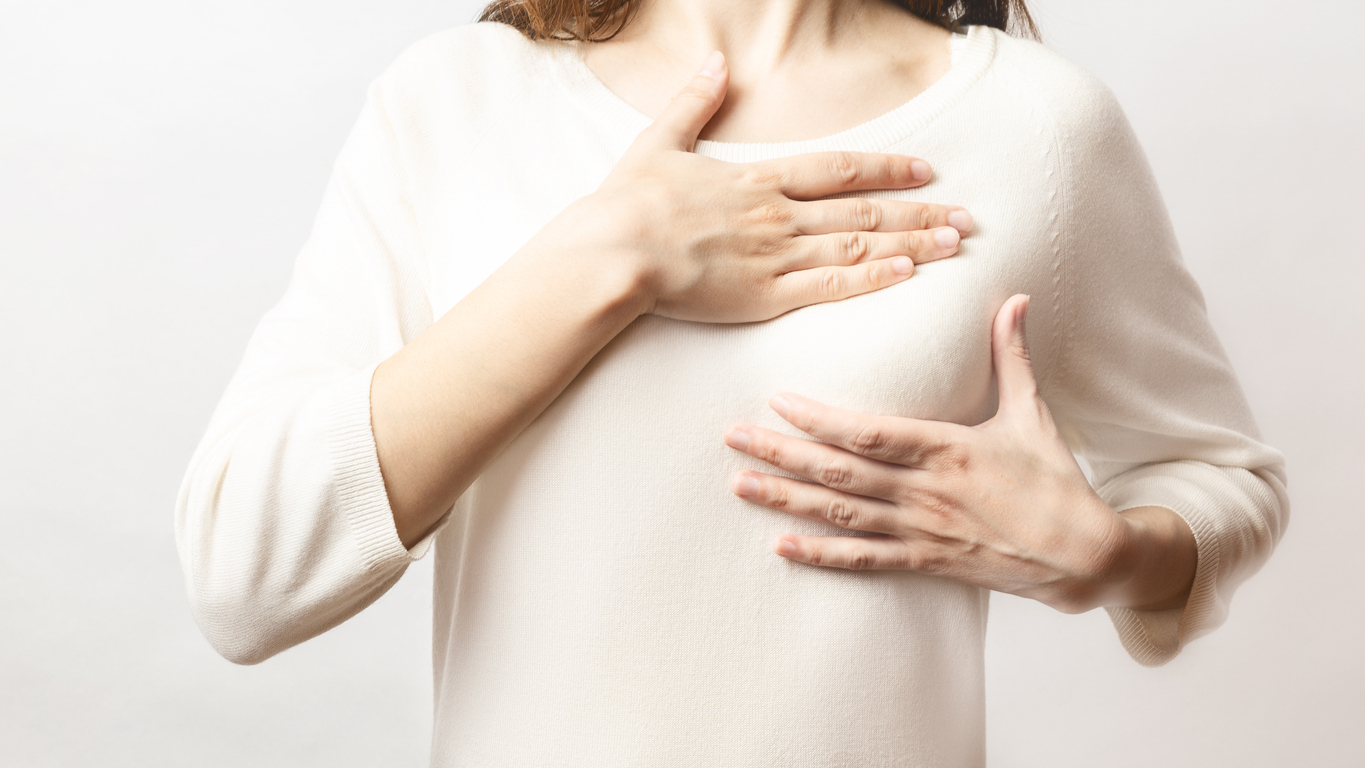
We encourage all of our patients to be breast-aware: to know what is normal for you so that any change becomes apparent. There is no single prescribed technique. What matters is that you check all areas of both breasts regularly, including the tissue that extends into the armpit, and that you both look and feel.
Many people find it easiest to check in the bath or shower, or while applying body moisturiser. Checking at roughly the same point in your menstrual cycle each month, ideally a few days after your period has finished, reduces variation caused by hormonal changes. The NHS provides guidance on how to check your breasts.
If you notice anything new, different, or persistent, contact us. Even if you feel certain the change is harmless, we would rather see you and confirm that than have you waiting and worrying.
When Should You Come and See Us?
Our straightforward advice is: as soon as you notice a new or changing breast lump. This applies regardless of your age, whether the lump is painful or not, and whether you feel it is almost certainly benign. Prompt assessment is always in your interest.
We have a specialist breast consultant available every weekday, and in most cases we can arrange your appointment within 24 hours of your request. You do not need a GP referral to book directly with us.
What Happens When You Come to 108 Harley Street
When you attend our Breast Clinic with a lump, we assess you using the triple assessment approach. This is the established clinical standard for breast lump investigation in the UK, and it brings together three elements in one appointment.
- Clinical assessment: Your consultant will take a full history, including your symptoms, relevant medical history, any medications you are taking, and your family history of breast cancer. A thorough clinical examination of both breasts and armpits follows.
- Imaging: You will have a mammogram, an ultrasound, or both, depending on your age and the nature of the lump. Our X-ray and imaging department is on site, so this is carried out during the same visit.
- Biopsy, where indicated: If imaging findings require further investigation, your consultant will take a tissue sample using a fine needle or core biopsy, typically under ultrasound guidance. The sample is sent to a laboratory for analysis, and results are usually available within a week.
In the majority of cases, the clinical examination and imaging together are sufficient to confirm a benign diagnosis, and we discuss the outcome with you at the appointment. Where a biopsy is required, we will contact you promptly with the result and talk through next steps.
For patients with a personal or family history that suggests a possible inherited risk of breast cancer, we also offer genetic testing through our Breast Clinic. This can provide important clarity about your long-term risk and guide the level of ongoing screening that is right for you.
Speak to Our Team
Finding a breast lump is understandably worrying. In most cases, we will be able to reassure you. In those cases where we find something that needs treating, catching it early gives you the best possible outcome. Either way, knowing is always better than not knowing.
Our Breast Clinic team is here to help. Book your appointment with the 108 Harley Street Breast Clinic today.