If you are not sure you are checking your breasts “properly”, or you keep meaning to and forgetting, you are far from alone. In a 2025 YouGov survey of more than 2,000 UK women for the charity Breast Cancer Now, 45% said they do not regularly check their breasts. The most common reasons were forgetting and simply not being in the habit.
This October, for Breast Cancer Awareness Month, we want to make checking feel simple. This guide covers how to check in three steps, how to get to know what is normal for you, which changes to look for, and what to do if you notice something new.
| In short How often: the NHS says you should try to check your breasts or chest about once a month. How: look in a mirror, feel each breast up to your collarbone and armpit, then feel around each nipple. What you are looking for: anything that is new or not normal for you, including lumps, skin changes and nipple changes. If you find something: see a doctor. Most breast changes are not cancer, but they should be checked. |
Why checking matters, even if you have screening
Breast cancer is the most common cancer in the UK, with around 59,000 new cases in women every year, according to Cancer Research UK.
The NHS Breast Screening Programme sends a first invitation between the ages of 50 and 53, then every 3 years until your 71st birthday. Screening is valuable, but it happens at set intervals, and women under 50 are not routinely invited. The NHS advises seeing a GP about symptoms even if you have recently had breast screening. Knowing your own breasts helps you spot a change between appointments. You can read more about the different types of mammogram and breast screening with us.
How to check your breasts in three steps
The NHS recommends this simple method:
- Look. Stand in front of a mirror and look at your breasts for any changes. Start with your arms by your sides, then raise them.
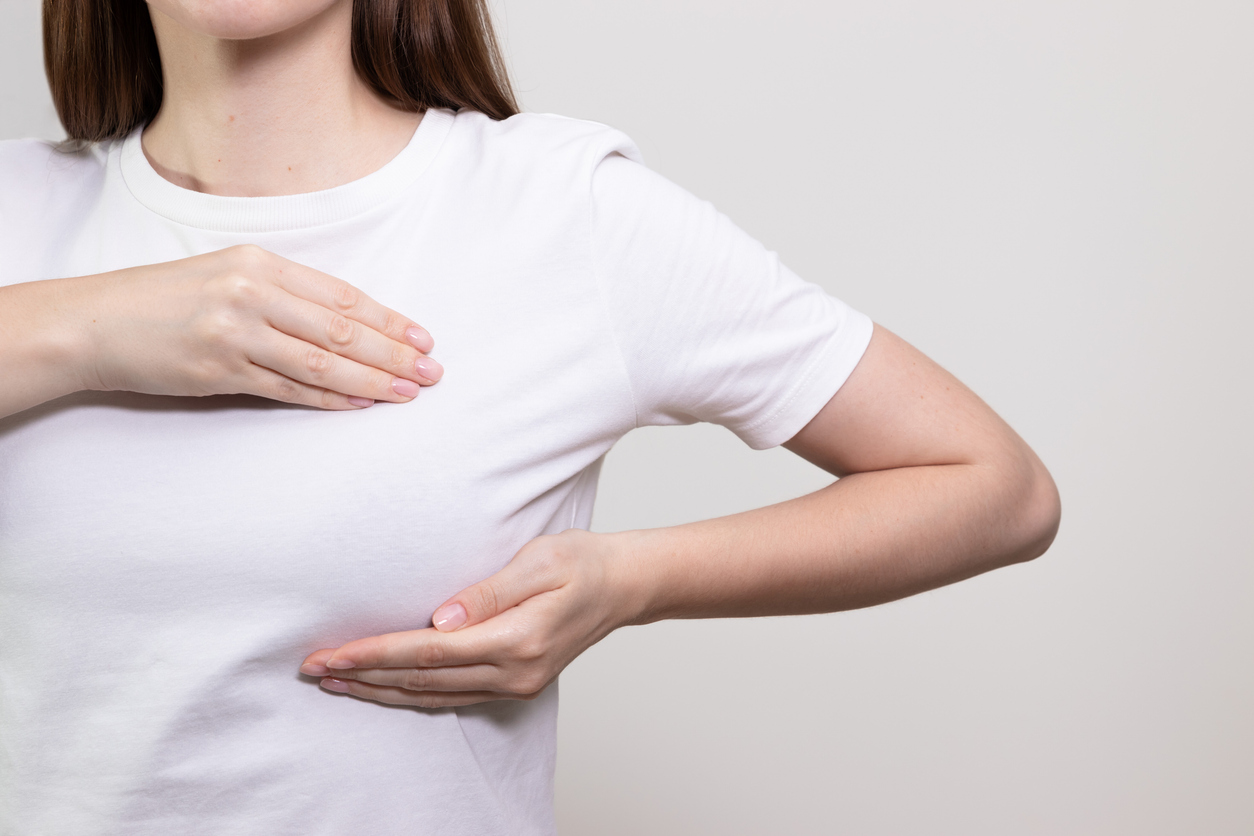
- Feel. Feel around each breast in a circular motion, all the way up to your collarbone and under each armpit. Use a mix of light and firmer pressure, but do not press so hard that it hurts.
- Check your nipples. Feel around and over each nipple.
You may find it easier to feel your breasts in the shower or while lying down. Try to check about once a month.
Get to know what is normal for you
Checking is less about finding something and more about learning what your breasts usually look and feel like, so a change stands out. It is common for breasts to be different sizes.
According to the NHS, your breasts may also naturally look and feel different:
- at different points in your menstrual cycle, if you have periods
- while you are pregnant or breastfeeding
- after the menopause
What changes to look for
The NHS lists these changes to look out for:
- A lump or swelling in your breast, chest or armpit.
- Skin changes, such as dimpling (it may look like orange peel) or a change in colour. On black or brown skin, the skin may look darker than usual; on white skin, it may look red.
- A change in size or shape of one or both breasts that is not normal for you.
- Nipple discharge if you are not pregnant or breastfeeding, which may have blood in it.
- A change in the shape or look of your nipple, such as it turning inwards (an inverted nipple) or a rash on it, which may look like eczema.
- Sores or ulcers on your chest.
Breast pain on its own is not usually a symptom of breast cancer, according to the NHS. But pain in your breast or armpit that does not go away is still worth getting checked.
Noticed a change? What to do next
Try not to panic. As Breast Cancer Now puts it, most breast changes are not cancer. You can read more about what a breast lump could be. But any new change should be checked by a doctor rather than watched and waited on.
Make an appointment with your GP, or with a specialist breast clinic, and mention anything that seems relevant, such as a family history of breast or ovarian cancer. If you have a strong family history, you may also want to ask about genetic testing.
Men can get breast cancer too
Breast cancer is much less common in men, with around 420 new cases a year in the UK according to Cancer Research UK, but it does happen. The NHS guidance on checking applies to the chest as well as the breasts. The NHS advises men to see a GP if they have a lump or swelling in the chest or armpit, discharge from either nipple, or any change in the chest or nipples that is not normal for them.
Why specialist assessment matters
GPs play a vital role and are often the first person you will see about a breast change. If you would rather see a specialist directly, our Breast Clinic offers consultant-led assessment, imaging and expert advice in one location, with same-day and next-day appointments available. Early assessment provides reassurance and helps guide the next steps.
The bottom line
As Breast Cancer Now puts it, there is no special technique and you do not need any training. Looking and feeling for anything new about once a month helps you learn what is normal for you. If something changes, get it checked. Most breast changes are not cancer, but the sooner breast cancer is found, the more successful treatment is likely to be.
This Breast Cancer Awareness Month, why not set a monthly reminder and make checking part of your routine? If you have noticed a change, book an appointment with our Breast Clinic.